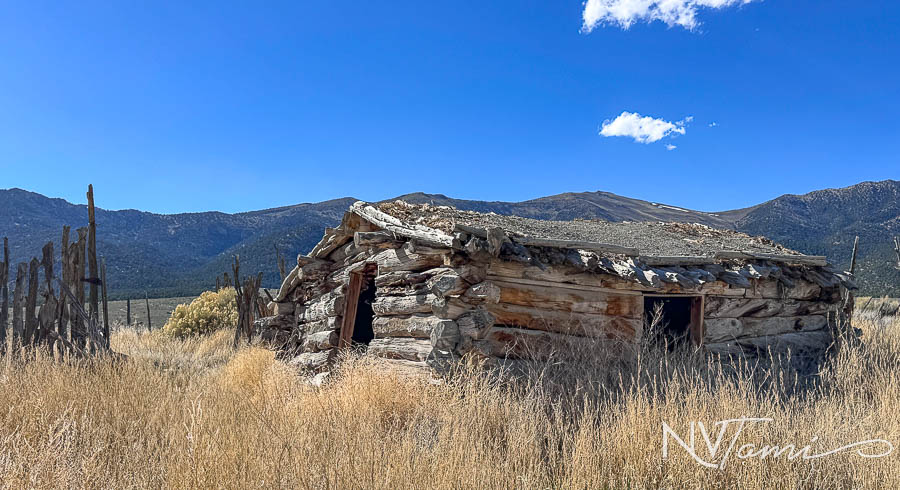
In the remote high desert of northeastern Nevada, Ruby Valley holds one of the state’s most evocative frontier stories. Long before ranches dotted the landscape, the Western Shoshone called the valley home. It served as a vital corridor for the Pony Express, Overland Stage, and emigrant trails. Yet it was also a place of tension, where cultures collided and the U.S. Army established Fort Ruby in 1862 to protect travelers and mail routes during the Civil War era.
Soldiers endured “the worst post in the West,” treaties were signed and broken, and ordinary people tried to carve out a living in a harsh and beautiful land.
Ruby Valley
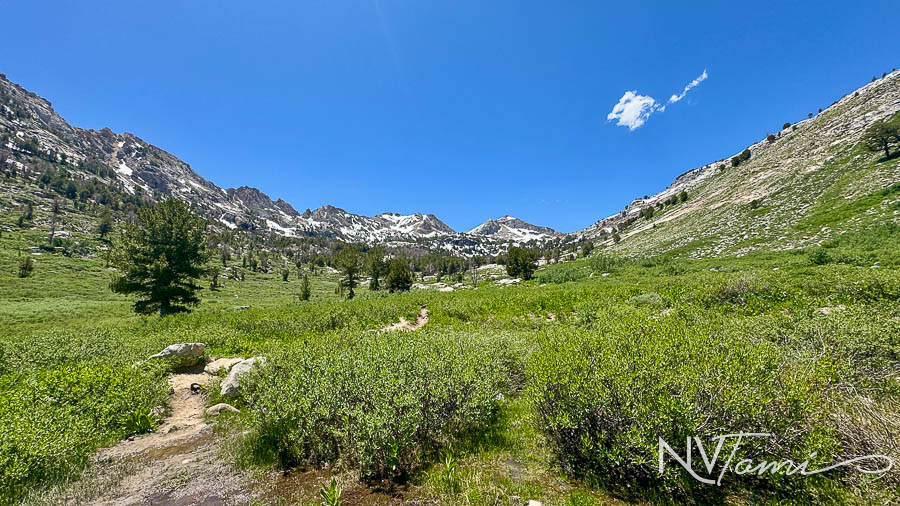
The Shoshone were the first to call what is now Ruby Valley home. They called the range Duka Doya, meaning “Snowcapped.” The Ruby Mountains run eighty miles north to south and are eleven miles wide. Ruby Dome, the highest peak, reaches 11,387 feet in elevation. East of the range lies Ruby Valley, which the Shoshone used for hunting, gathering pine nuts, and wintering.
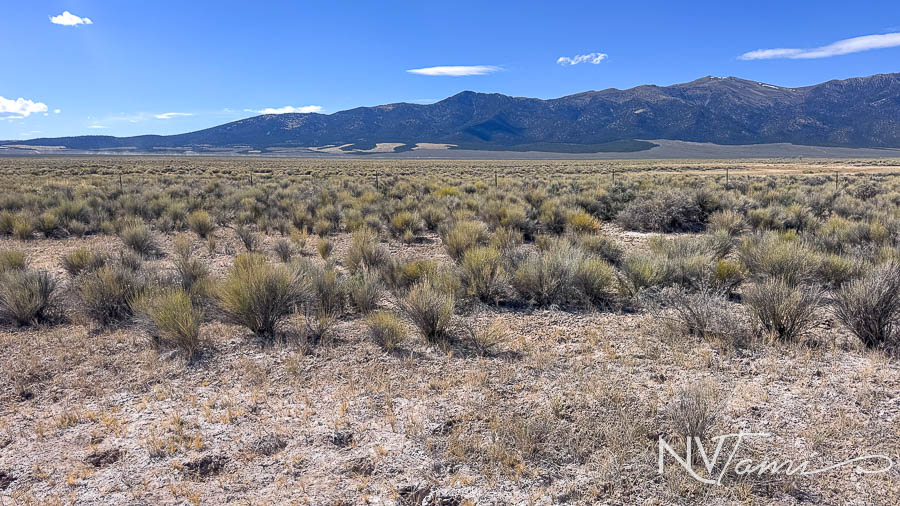
An Army expedition first laid eyes on the range in 1854 while scouting alternative western routes. One member, named Davis, panned for gold at the base of the mountains and discovered what he thought were rubies. Although the gems turned out to be red garnets, the name “Ruby” stuck.
The first to settle in Ruby Valley was William “Uncle Billy” Rogers, former sheriff of El Dorado County, California. Appointed as an Indian Agent, he was tasked with locating a site for a reservation. Rogers homesteaded, planted a garden, and started a trading post.
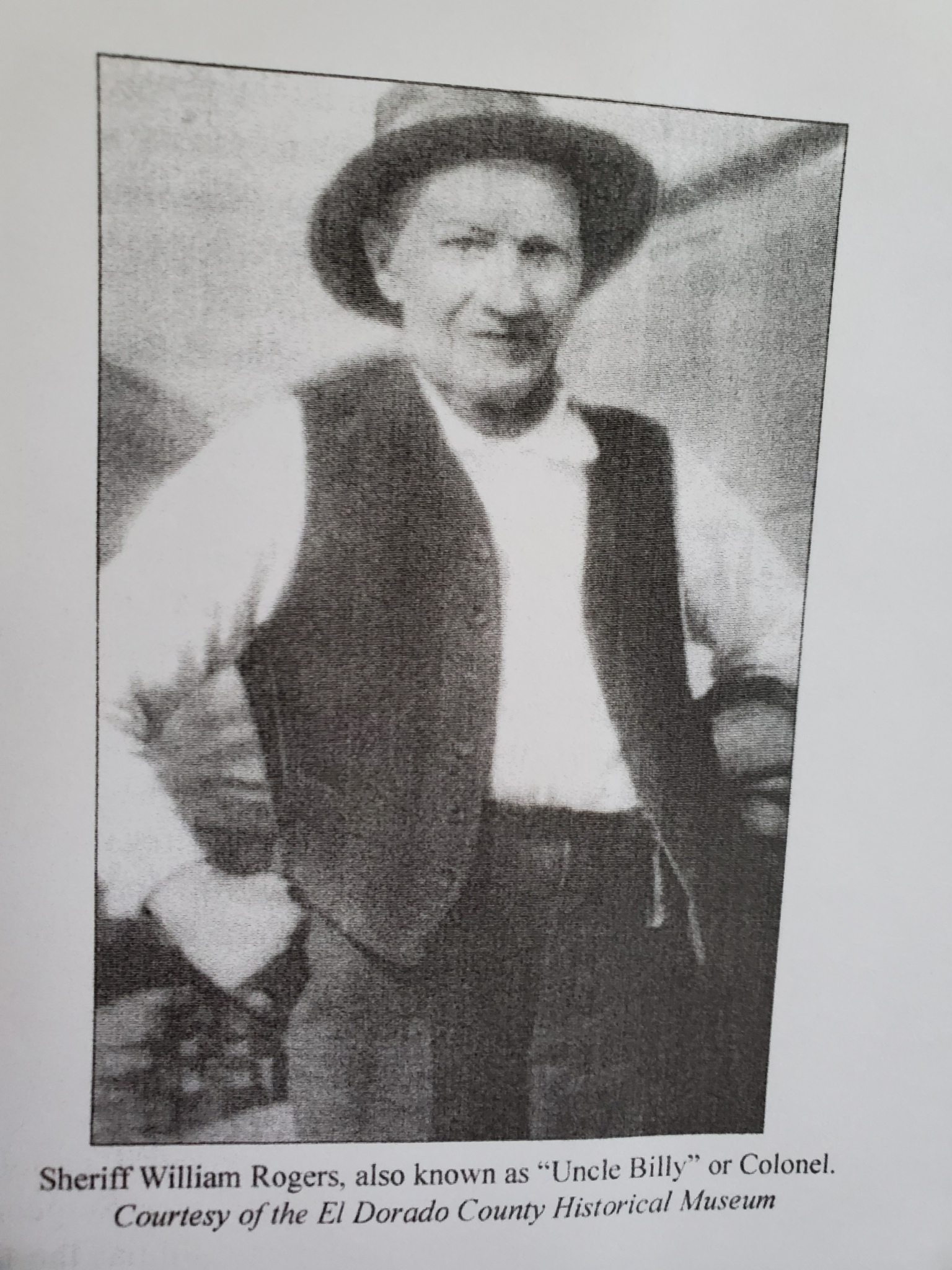
(Photo credit: El Dorado County Historical Museum)
The Pony Express chose Rogers’ station, naming it Ruby Valley. Although the Pony Express operated only from April 1860 to October 1861, the Overland Stage Company continued to use the station through the 1860s.
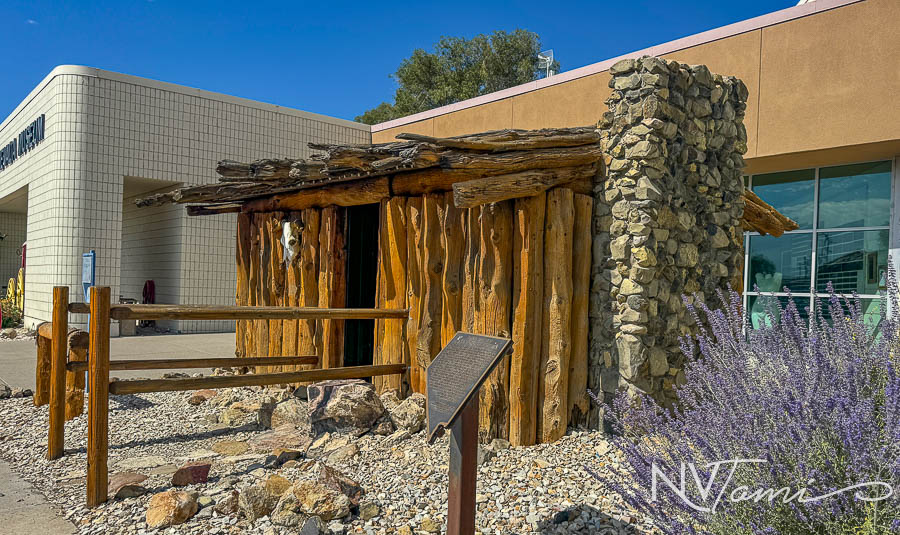
Fort Ruby
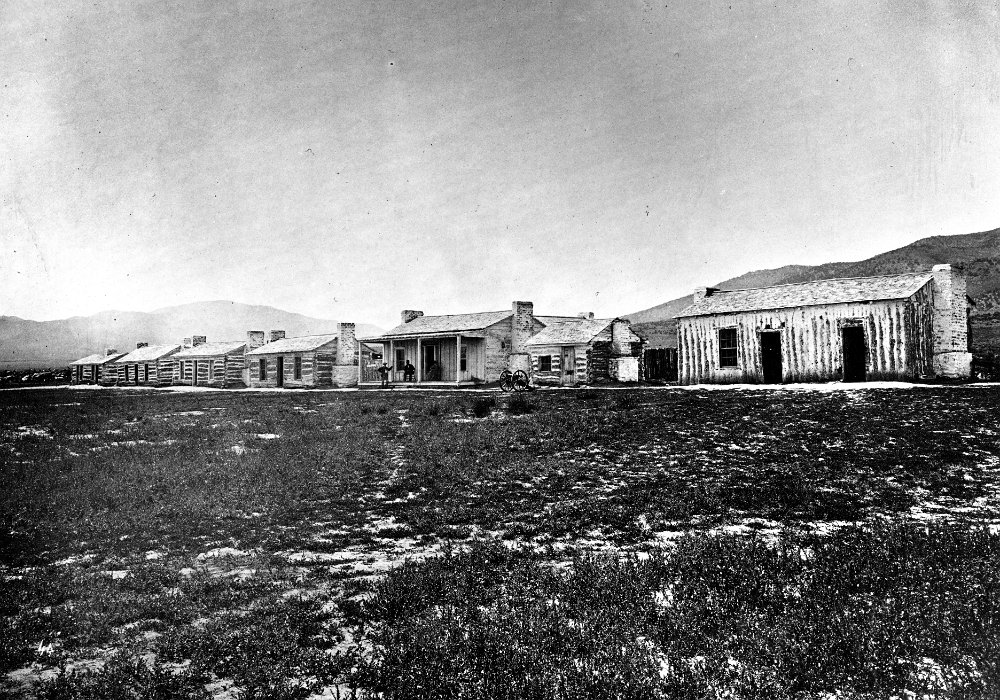
Travelers, mail carriers, and freight on the route faced increasing difficulties with Native Americans and needed protection. In 1862, Fort Ruby was established to safeguard the Central Overland route. The location was roughly the halfway point between Salt Lake City, Utah and Genoa, Nevada — a distance of about 600 miles.
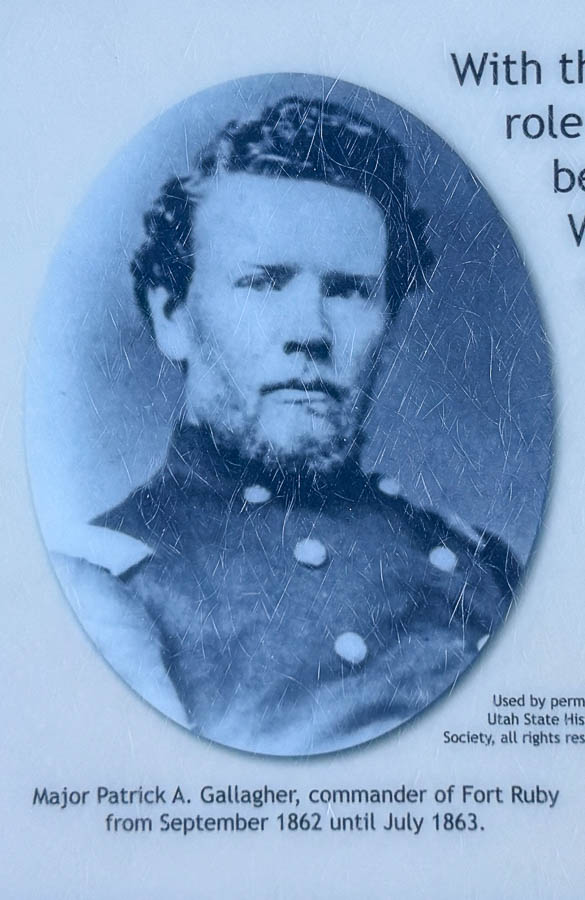
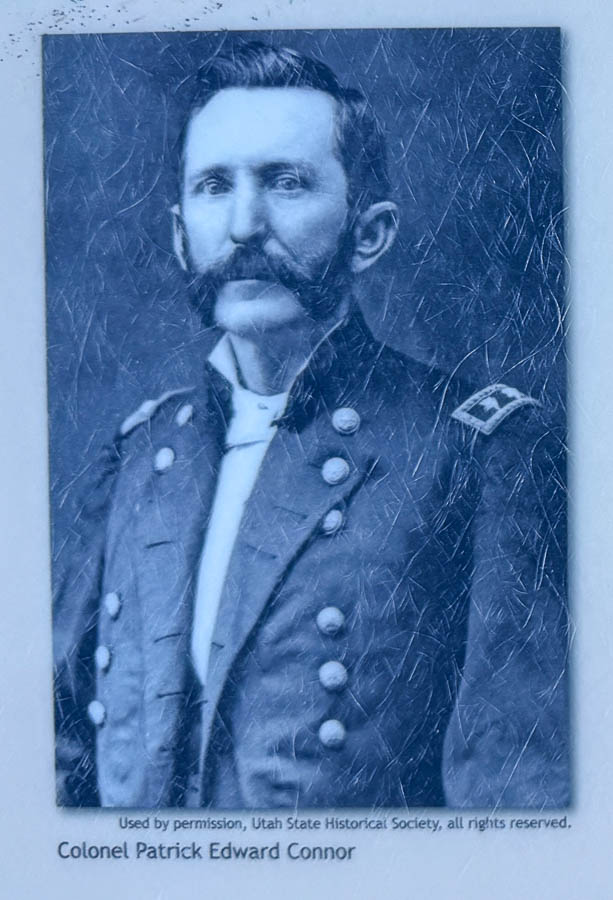
Established on September 4, 1862, under orders from Col. Patrick E. Connor of the 3rd California Infantry, the first garrison consisted of Companies C and F, commanded by Major Patrick A. Gallagher, who oversaw construction.
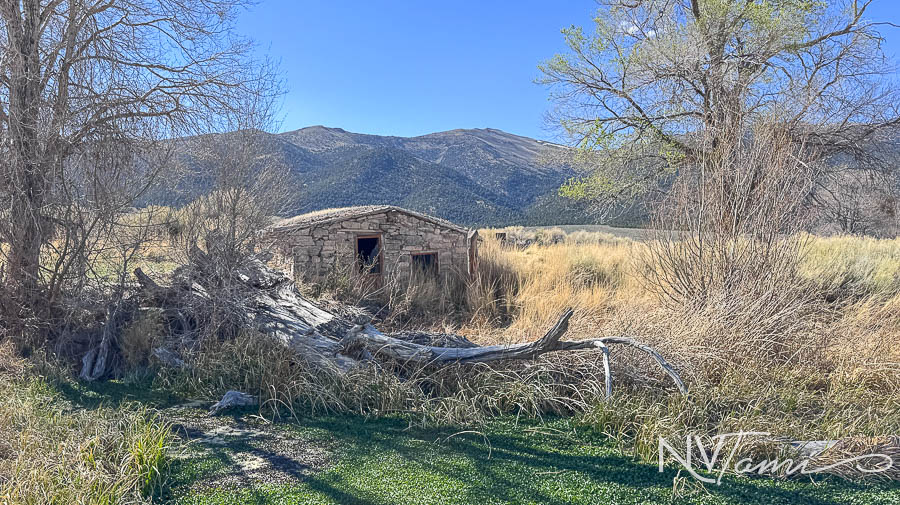
The soldiers cut timber and gathered stone from the nearby mountains to build a compound that eventually included around 14 buildings: storehouses, living quarters, stables, and corrals. A small natural spring provided fresh water.
“The Worst Post of the West”
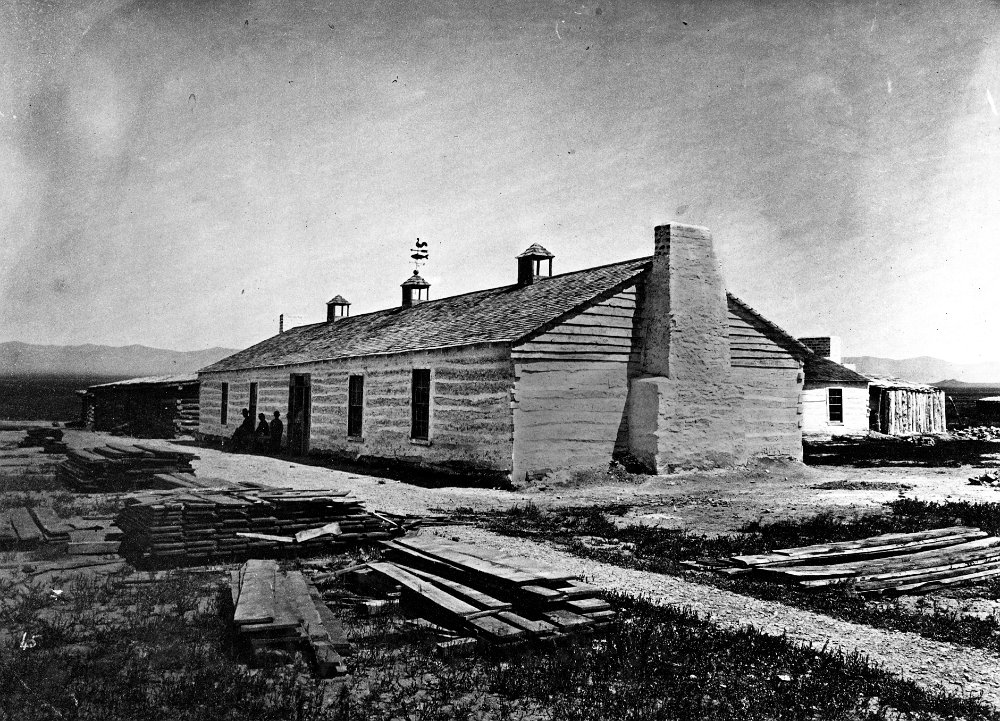
Fort Ruby earned a reputation as “the worst post of the West.” While most frontier forts were remote, Ruby Valley was exceptionally isolated — 120 miles from the nearest town. Col. Connor described it as “a bleak, inhospitable place — no forage, nor lumber to build with, and as far as the Indians are concerned, entirely unnecessary to keep troops there.”
Soldiers were so desperate to leave that they offered to forgo all back pay (totaling $30,000) if they could transfer east to fight in the Civil War. In 1867, Captain George Walker assumed command. He immediately took a six-month furlough and, upon returning to Fort Ruby, died of apoplexy (likely a stroke) around March or April 1868.
Goshute War & the Treaty of Ruby Valley
Settlement in Ruby Valley disrupted the traditional hunting, gathering, and water sources of the Goshute (a band of the Western Shoshone). With declining resources, they raided stations, wagon trains, and settlers. In 1863 alone, the Overland Stage Company lost 16 employees, 150 horses, and several stations.
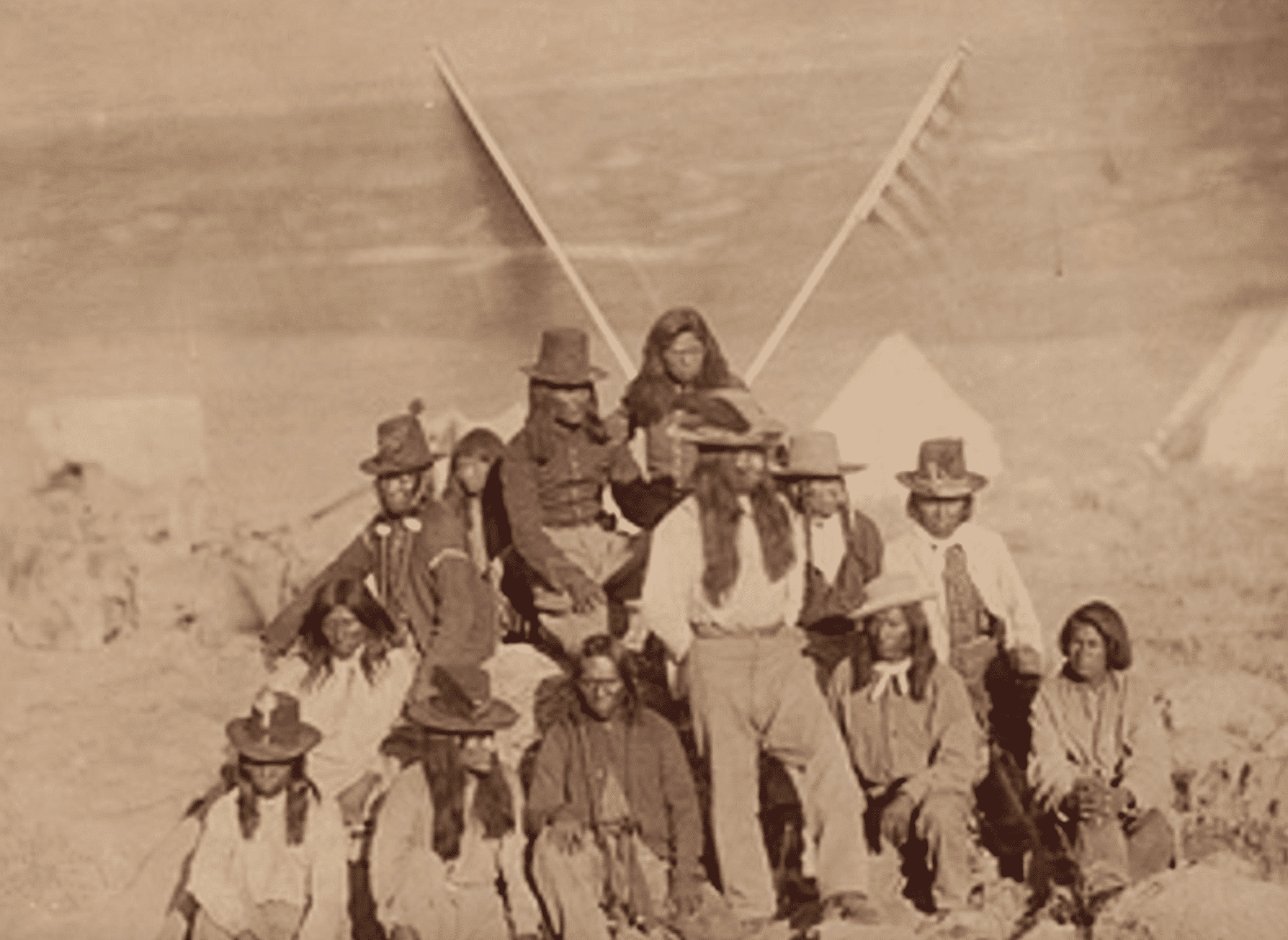
In retaliation, soldiers from Fort Ruby conducted punitive expeditions, including attacks at Duck Creek and Spring Valley. Rather than one large battle, the Goshute War consisted of a series of raids and skirmishes.
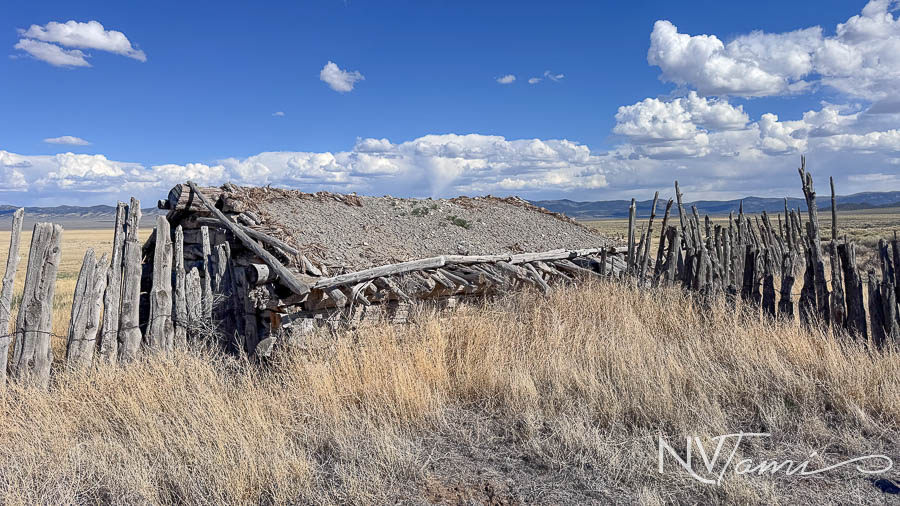
On October 1, 1863, the Treaty of Ruby Valley was signed at the fort. The Goshutes agreed to cease hostilities and allow safe passage for travelers, the military, mining, ranching, and railroads. They did not cede land or sovereignty. In return, the U.S. promised annual payments as compensation for lost resources. The treaty was ratified in 1864, but payments were minimal or nonexistent after the first year. This led to widespread poverty and displacement to reservations. Disputes over the unfulfilled treaty continue into modern times.
Cave Creek
Once construction of Fort Ruby was complete, soldiers’ activities were limited. They explored Ruby Valley and prospected in the Ruby Mountains. One group discovered crystal-clear water rushing from the mountainside and a cave entrance, naming the site Cave Creek.
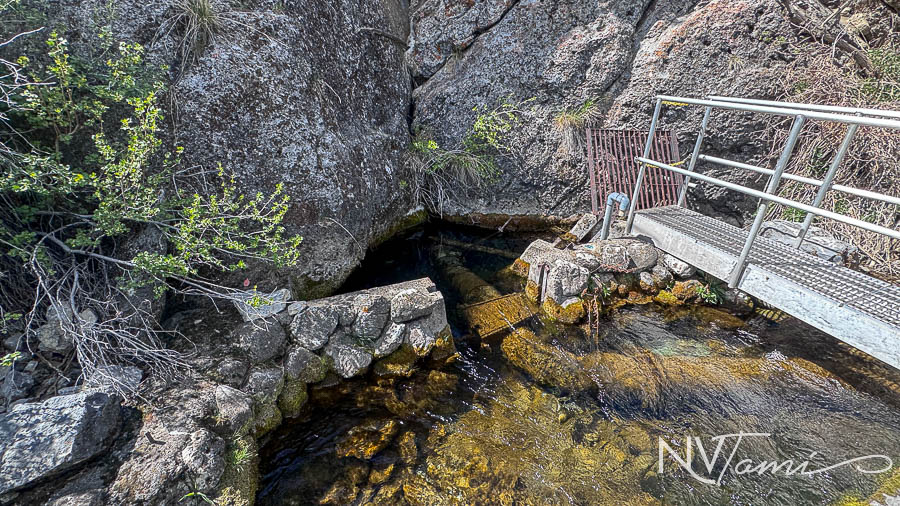
A small settlement formed around the spring-fed creek. Its main attraction was a distillery known as “Old Commissary,” owned by Samuel Woodward and Michael Flynn. As one newspaper noted…
…old rye and bourbon are dispensed to those who are depressed in spirits to arouse them.
Elko Independent, July 10, 1869
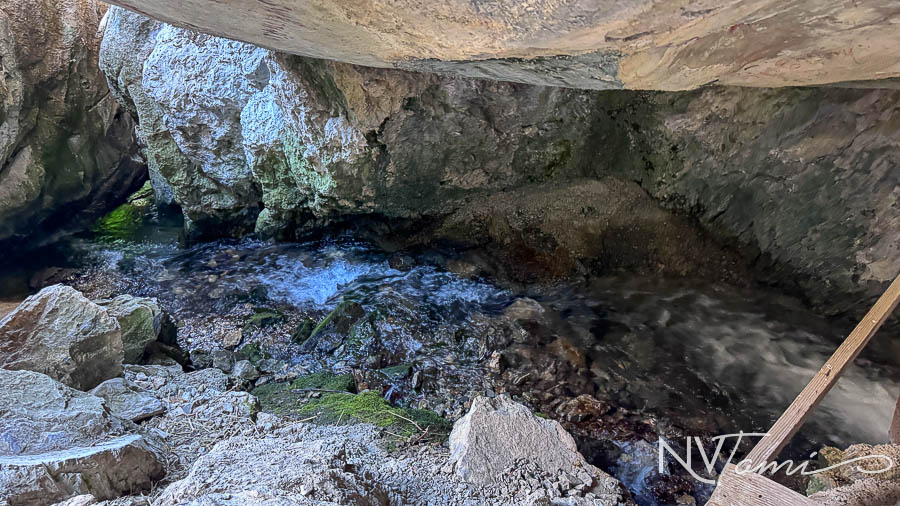
The most enduring story from Cave Creek is the drowning of soldiers from Fort Ruby. According to the tale, four soldiers rowed into the cave; the boat capsized, one man escaped, but three drowned. Variations of the story involve a love triangle. Learn more about this tale at Cave Creek & Fort Ruby Drownings.
The End of Fort Ruby
On January 1, 1867, the post was redesignated Camp Ruby. With the completion of the transcontinental railroad in 1869, overland stage traffic declined sharply, ending the need for such a remote fort. Orders to evacuate came in March 1869. By September 20, 1869, the last garrison — Company I of the 9th Infantry — departed.
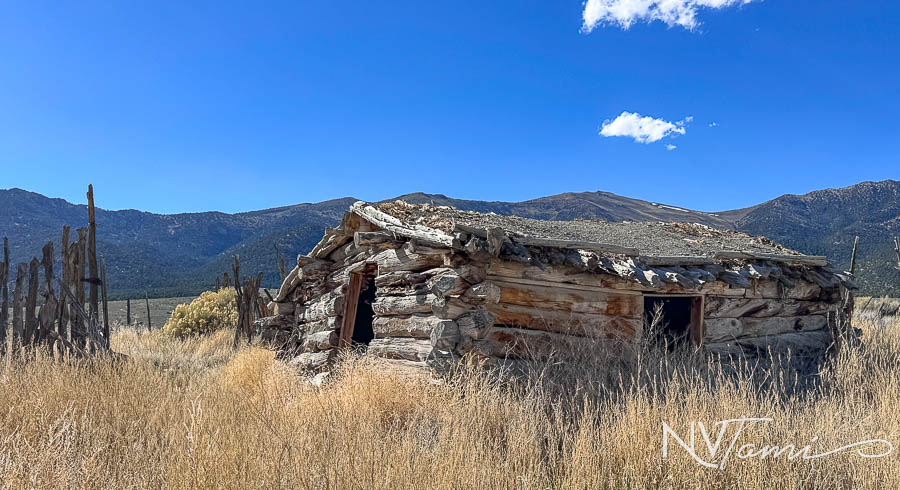
Many soldiers received land as severance and settled in Ruby Valley. Lt. Col. Jeremiah B. Moore (an earlier commander) remained in the area and later became a state senator. The final commander was Captain Timothy Connelly (also spelled Connolly). He led the post from 1868 until its closure. On May 20, 1869, Connelly was court-martialed at Camp Halleck for embezzling company funds at Fort Ruby. He was found guilty of conduct unbecoming an officer and a gentleman for selling company rations and other property and was dismissed from the service.
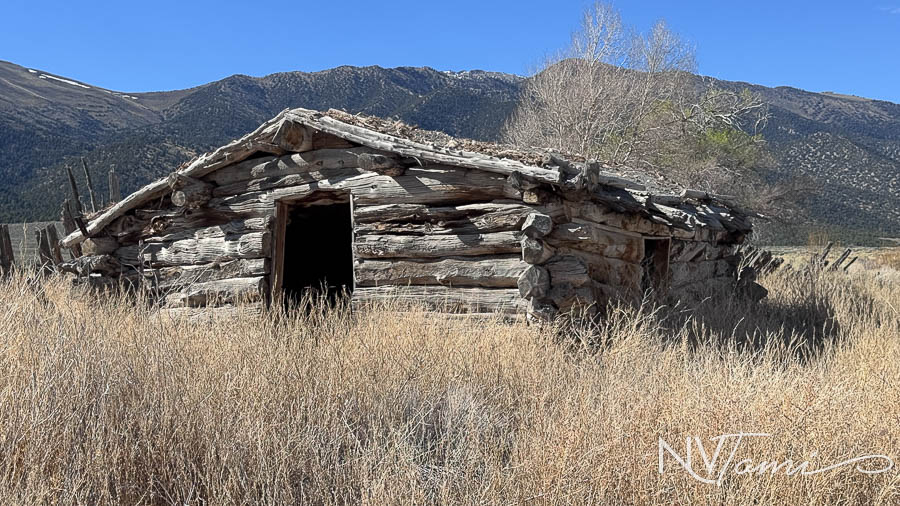
After 1870, many buildings were sold to nearby ranchers and moved off-site. By the mid-20th century, only two original structures remained (an enlisted men’s barracks and one officer’s quarters) on private ranch land. Tragically, both were destroyed in an electrical fire in 1992.
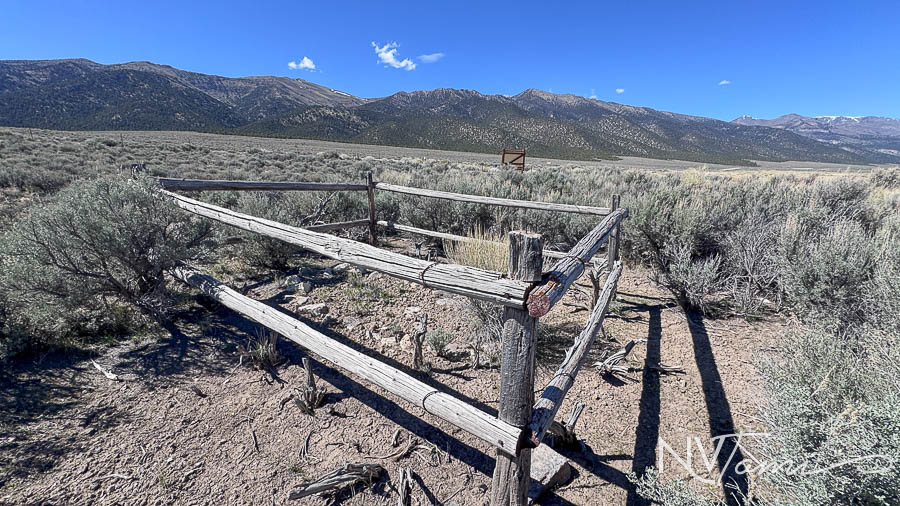
In 1901, the remains of soldiers who died while in service at Fort Ruby were exhumed, taken to Elko and transported to the Presedio of San Fransisco for reburial. The was part of the post Civil-War effort to consolidate military graves. The one visible remaining grave in the area is likely that of a civilian.
Hobson
Next to the site of Fort Ruby in Ruby Valley developed a small ranching community known as Hobson. It served local ranching, freighting, and residual Overland stage traffic in the decades after the fort’s abandonment in 1869.
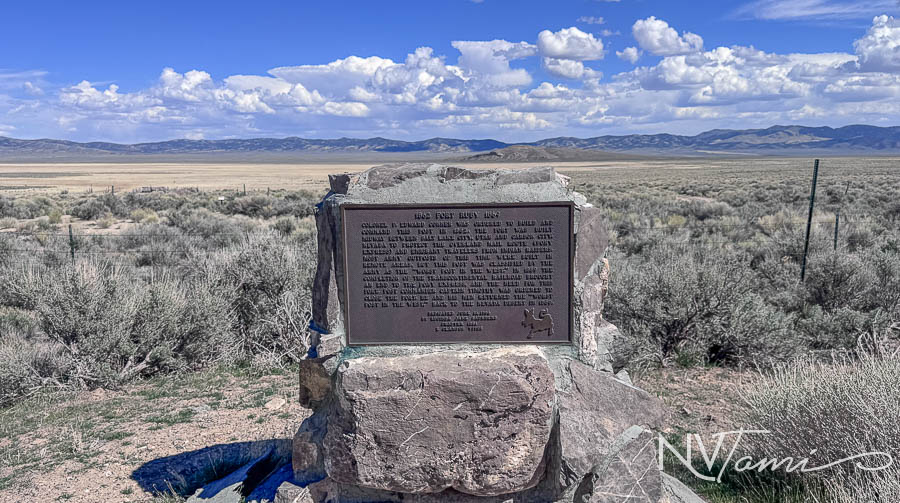
A post office opened on August 7, 1902, and operated until November 30, 1914, providing a brief period of official recognition for the scattered ranches and families in the area. Like many high-desert outposts, Hobson gradually faded as the region remained remote and sparsely populated. Today it is a true ghost town with little remaining, best known for its close association with the Fort Ruby National Historic Landmark.
WANT MORE GHOST TOWNS?
For information on more than five hundred ghost towns in Nevada & California, visit the Nevada Ghost Towns Map or a list of Nevada ghost towns.
Learn about how to visit ghost towns safely.

References
- Carlson, Helen S. Nevada Place Names: A Geographical Dictionary. University of Nevada Press, Reno and Las Vegas. 1974.
- Forgotten Nevada: Fort Ruby
- Gamett, James and Stanley W. Paher. Nevada Post Offices: An Illustrated History. Nevada Publications. Las Vegas. 1983.
- Geneology Trails Historic Group
- Hall, Shawn. Romancing Nevada’s Past. University of Nevada Press, 1994.
- National Park Service
- Nevin, David. The Old West: Soldiers. Time Life Books, Alexandria, Virginia. 1974.
Paher, Stanley. Nevada Ghost Towns & Mining Camps. Nevada Publications, 1970. - Roberts, Robert B. Encyclopedia of Historic Forts: The military, pioneer, and trading posts of the United States. MacMillan Publishing Company, New York. 1988.
- Southwest Backcountry: A History of Fort Ruby
- Thompson, Thomas H and Albert Augustus West. History of Nevada, 1881. Introduction by David F. Myrick. Howell-North, 1958.


Sheila H says
Im listening at this moment to Radio Goldfield talking is Nevada Tammie. Very cool to find your info as I’m listening to the drownings. Awesome.
Tami says
Love it! Did you see I have a full article on Cave Creek?
Matt says
This is very comprehensive, a great history of a beautiful valley. Are those the relocated buildings on ranches in the valley? I have only noticed Bressman Cabin and the ruins where the plaque is. (And the sad flagpole that needs fixing, the refuge is a bunch of dorks.)
Tami says
I’m glad you enjoyed it. I would be surprised if some of the old fort buildings were moved to ranches. The ones in my photos are at Fort Ruby. They are farther back than the parade grounds.
It would be great to see a flag at Fort Ruby.
David A Sadewasser says
Great story! Beautiful area, but I can only imagine how miserable the isolation must have been at the time of Fort Ruby. Today, there is a settlement nearby called “Shantytown” on most maps. Is it in any way related to the old fort?
Tami says
Lots of fun history with Fort Ruby. I went past Shanty Town. From what I found, it was much later than Fort Ruby.
Anonymous says
Tami, I hope to eventually meet face to face with you. Would like you to know that I have traveled around Nevada ghost towns and mining camps since 1976. I have over 100 topo maps that I would like for you to get when my bi-annual trips to Nevada are no longer feasible. Also, I have kept a journal for over the past 25 years. My fall trip begins this Sat. Hope to someday meet you…………Don Post
Tami says
I appreciate you thinking of me. I hope you get to explore for a long time, but I would love the maps when you are done. Watch out for Honey Badger on the road; she could be anywhere!
Have a wonderful trip!
George Hartman says
Wonderful story and research. Thank you! Like all of my other comments and questions that go unanswered, do you habe any info on Imlay, Puckerbrush, and Chief Thundercloud’s place
Tami says
I answered your other comment on the website last week. I try to respond to every email, message, or comment I receive. However, I do occasionally miss some, especially on Facebook if they aren’t on my page, so I don’t necessarily see them.
I have an article on Thunder Mountain. https://nvtami.com/2023/06/12/thunder-mountain/
Implay and Puckerbrush I’ve mentioned but haven’t done an in-depth article on.
Glenn Jones says
I’ve been following on Facebook for a while – don’t know why I didn’t click on the links earlier! Thank you for such a thorough history. Very informative read.
Tami says
So glad you finally clicked on the link! There is so much more information on the website than on social media. I also have a newsletter I send out once a week that comes to your email. That way you don’t have to depend on Facebook to determine what they think you want to see.