Crater is a forgotten settlement at the southern end of Mono Basin. Concrete foundations, dugouts, debris, and a few dead trees are all that mark the location.

While only a small settlement, Crater is filled with stories of life in the Mono Basin. Once a peaceful hamlet, the schoolhouse played a role with desperados, posses, and the tragic murder of a young Sheriff.

Postal Service around Mono Lake
(Photo credit: Owens Valley History)
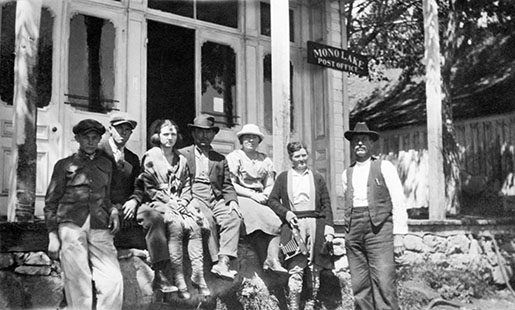
The post office of Mono opened on March 21, 1882. Two years later, it moved to Bodie. In 1889, a post office opened in Mono Lake, with John Mattley as the first postmaster. The office was a single room with cubby holes for mail.

In the winter, the trip could be impossible or life-threatening. While the setting of the town of Mono Lake is beautiful, it is in a precarious position at the base of the Sierra, and avalanches are all too common.
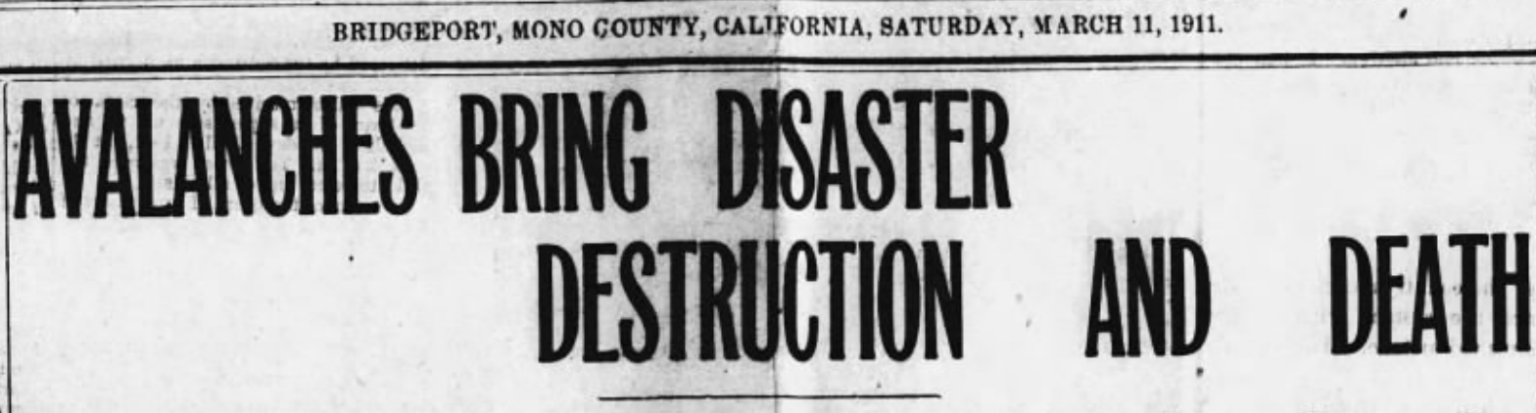
Mar 11, 1911Page 1
Crater Post Office
For residents on the southern side of Mono Lake, receiving mail wasn’t easy. It required a five-mile trip to the post office at Mono Lake. Because the road around the lake was a toll road, each trip required payment, meaning it cost them money to receive the postage. To add insult to injury, even if there was no mail, they still had to pay the toll!
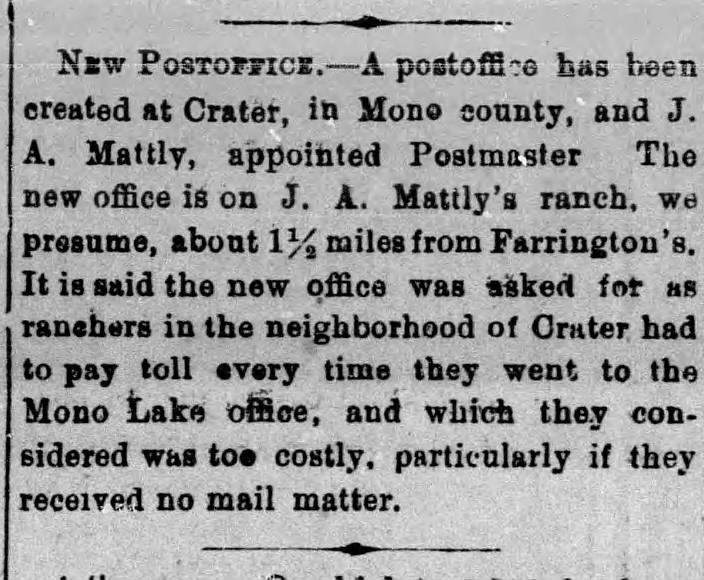
Mono Herald and Bridgeport Chronicle-Union
Mammoth Lakes, California • Sat, Oct 14, 1899
On April 18, 1899, a post office opened to serve residents of the southern basin. It was on the J.A. Mattly ranch under the name Crater. Mattly served as the post master.

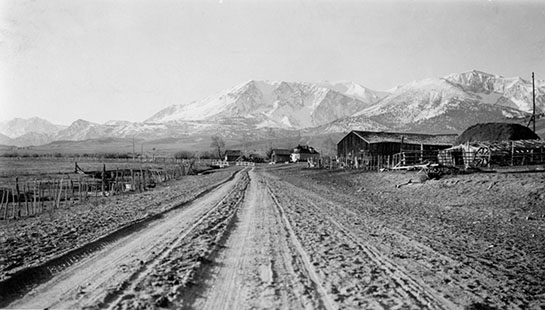
The Crater post office served primarily the ranchers and a few of the southern mines. The post office operated until September 15, 1911.
(Photo Credit: Owens Valley History)
Crater was north of the Farrington Ranch. In a 1966 newspaper article, Ella Mattly, then living in Ontario, recalls visiting the Crater post office. She places the location at the Farrington Ranch. The Mono Herald and Bridgeport Chronicle-Union reported in 1899, the post office opened on the Mattly Ranch, it can be assumed time and distance led to the confusion.
Crater School
Crater never grew into a town but was more of an unincorporated settlement. However, enough children lived in the area to open a school at Crater. The school was well attended, and included students from the local Pauite camps. One teacher, Miss Pyle, married Will Farrington. Eventually, the school moved to the Farrington Ranch, a mile and a half to the south, and a new schoolhouse was built. Ten different teachers taught at the school while it was at Farrington.
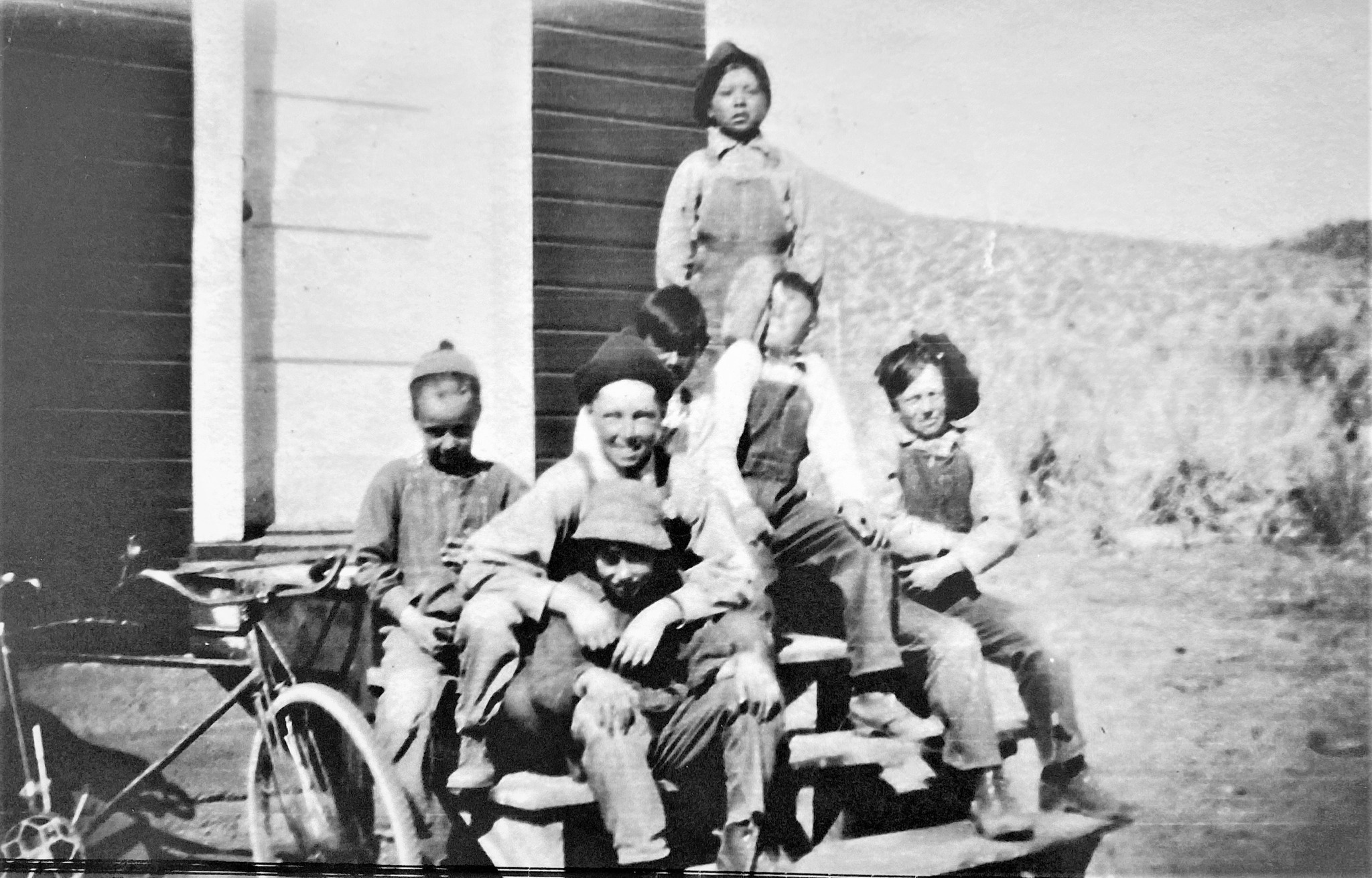
Photo courtesy of the Mono Basin Historical Society
The schoolhouse became a meeting place, event center, and a church. Parties, dances, and civic events were well attended by Crater’s population and visitors from Mono Lake.
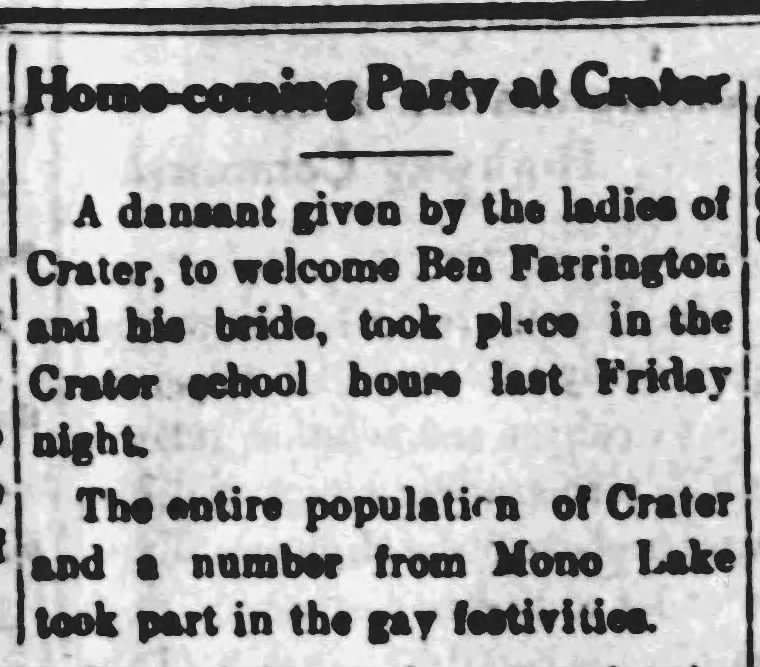
Mammoth Lakes, California
Sat, May 1, 1915 · Page 1
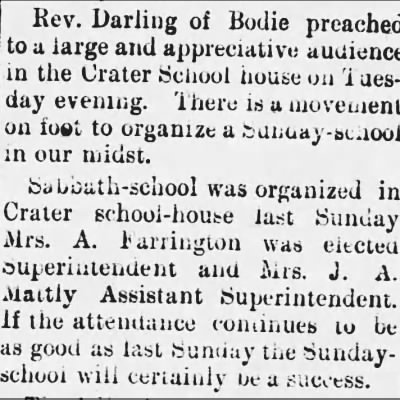
1904 Rev Darling from Bodie preached at the schoolhouse at Crater to a “large and appreciative audience.” Mrs. Farrington and Mrs. Mattly organized a Sunday School with good attendance.
Like Mono Lake to the north, winters at Crater could be difficult. In 1906, the settlement was snowed in for three weeks. Miss Newman, who had been carrying for her father hill, was “forced” to remain in Crater during this period.
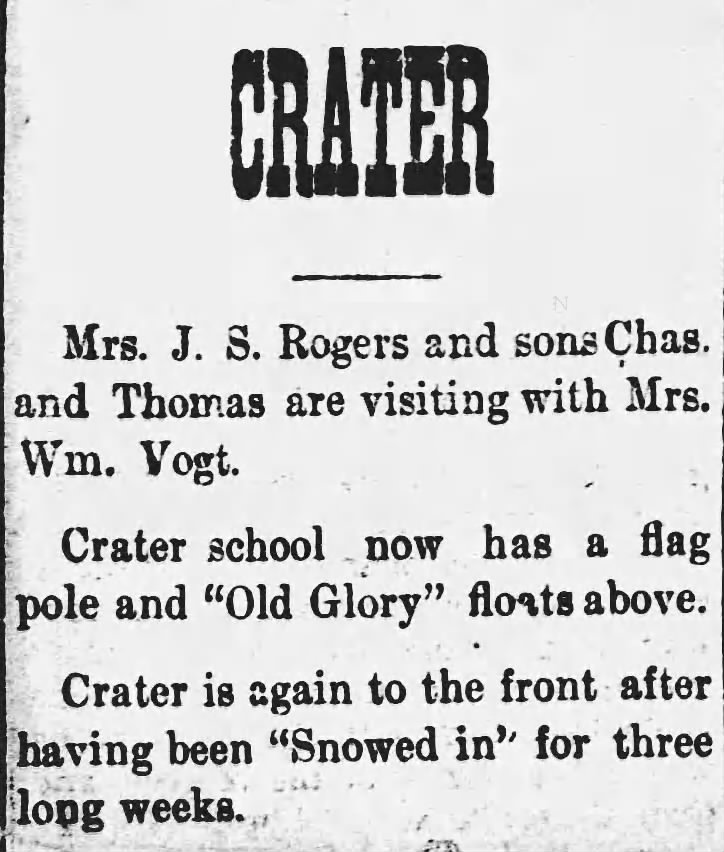
Mammoth Lakes, California • Sat, Feb 17, 1906Page 1
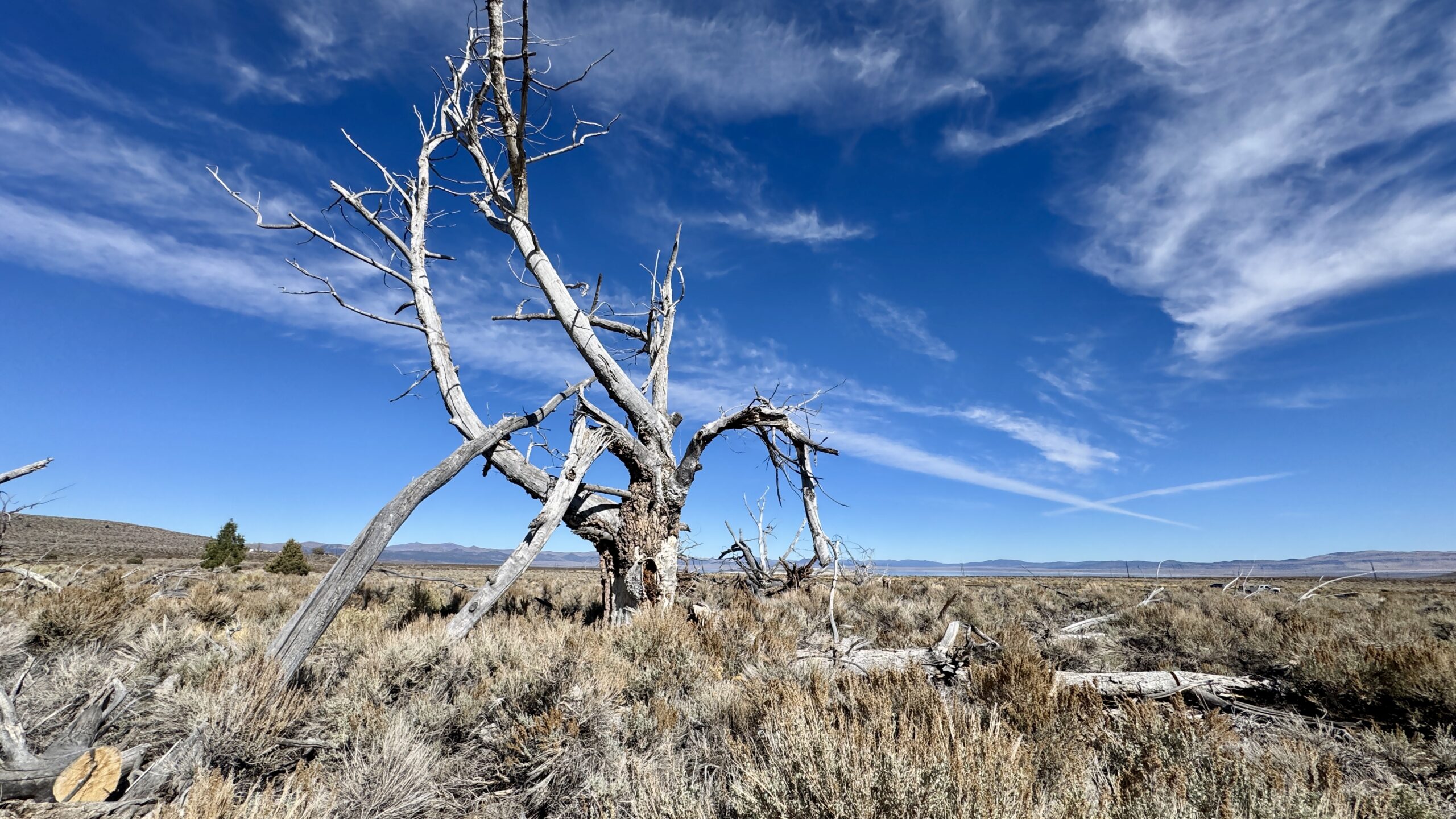
Crater and the death of desperados
In 1915, the Dolan schoolhouse was used for a different purpose, a morgue.
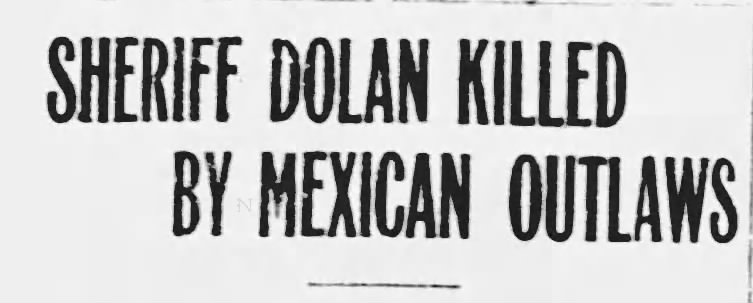
Mammoth Lakes, California • Sat, Jul 31, 1915Page 2
Workers from Mexico were digging ditches for a new development near the base of Conway Summit. Workers Juan Francisco, age 50, and Theodore Teddy Solido, age 22, got drunk and kidnapped a girl, Sal, from the Piaute camp near Filosena Ranch. Pete Roberts and George Filosena rescued Sal. In retaliation, Francisco and Solindao attacked their ranch that night.
(Photo credit: Officer Down Memorial Page)
The kidnapping led to a multi-day hunt for Francisco and Solindao. The bandits, armed with a rifle and one with a pistol, fired on Sheriff Dolan, hitting him several times. Tragically, the Sheriff died despite medical care.
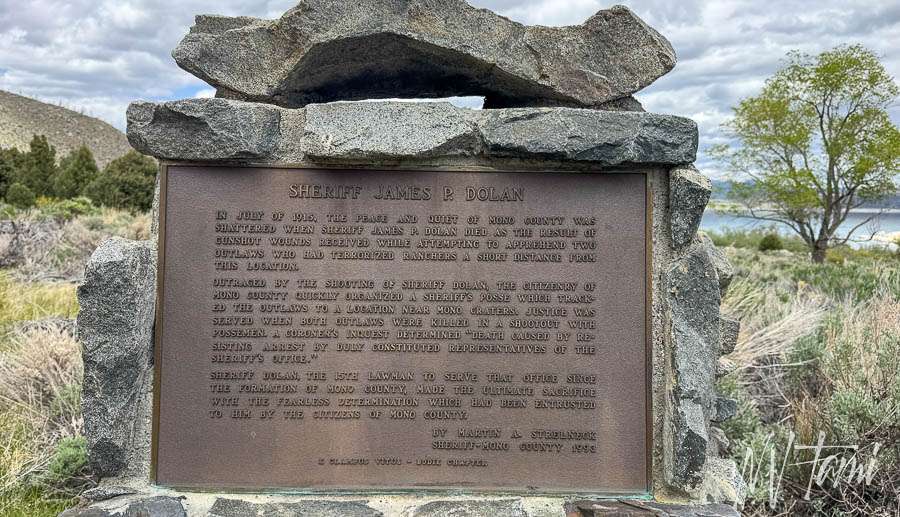
A posse caught up with the bandits near the craters, where a shootout ensued. Francisco and Solido were shot dead. The posse took the bodies to the Crater school. The justice of the peace, Pearl Mattly, ruled the killing justified.
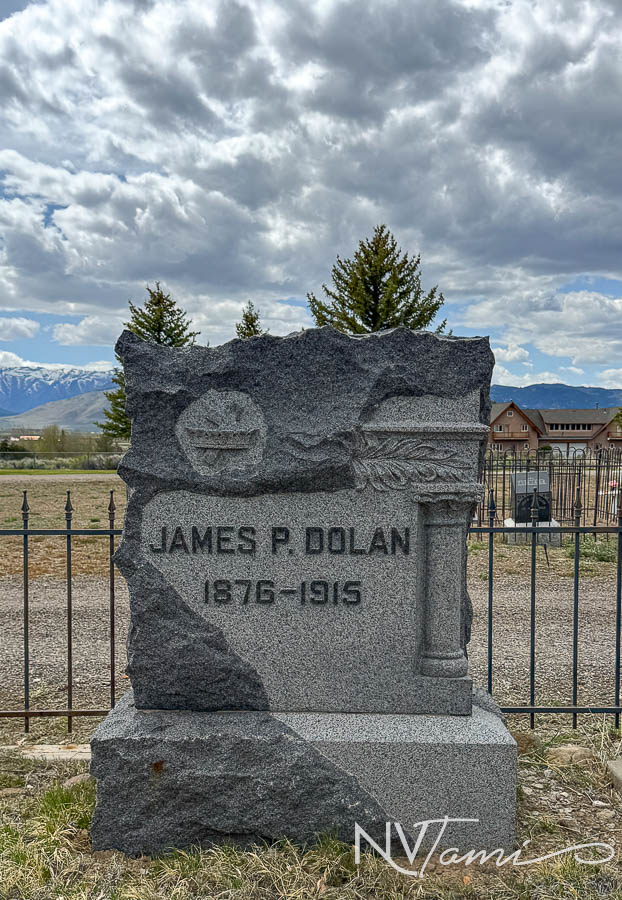
Francisco and Solindao were likely buried in unmarked graves at a location lost to time. Sheriff Dolan was buried in Bridgeport.
WANT MORE GHOST TOWNS?
For information on more than five hundred ghost towns in Nevada & California, visit the Nevada Ghost Towns Map or a list of Nevada ghost towns.
Learn about how to visit ghost towns safely.

References
- Calhoun, Margaret. Pioneers of Mono Basin. Artemisia Press. 1984, page 16. 59, 60, 132-133.
- La Braque, Lily Mathieu. Man from Mono. Lily Mathieu La Braque, 1984.
- Mono Herald and Bridgeport Chronicle-Union Sat, Jan 16, 1892
- Mono Herald and Bridgeport Chronicle-Union Sat, Dec 7, 1895
- Mono Herald and Bridgeport Chronicle-Union Sat, Oct 14, 1899
- Mono Herald and Bridgeport Chronicle-Union Sat, Oct 29, 1904
- Mono Herald and Bridgeport Chronicle-Union Sat, Dec 23, 1905
- Mono Herald and Bridgeport Chronicle-Union Sat, Feb 17, 1906
- Mono Herald and Bridgeport Chronicle-Union Sat, Apr 25, 1908
- Mono Herald and Bridgeport Chronicle-Union Sat, May 1, 1915
- Mono Herald and Bridgeport Chronicle-Union Sat, Jun 18, 1927
- Mono Herald and Bridgeport Chronicle-Union Sat, Sep 3, 1927
- Mono Herald and Bridgeport Chronicle-Union Sat, Dec 31, 1932
- Mono Herald and Bridgeport Chronicle-Union Thu, Jan 23, 1941
- Mono Herald and Bridgeport Chronicle-Union Fri, Jun 10, 1966
- Salley, H.E. History of California Post Offices. The Depot, 1991.
- Wedertz, Frank S. Mono Diggins: Historical Sketches of Old Bridgeport Big Meadows and Vicinity. Chalfant Press, 1978.


Leave a Reply