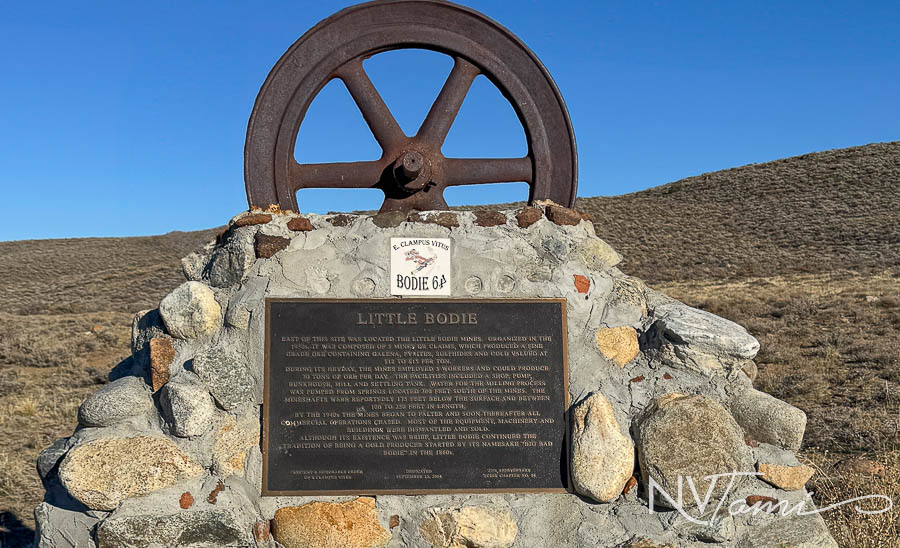
If you are interested in ghost towns, there is a good chance you have been to Bodie. But have you been to Little Bodie? Two miles south of the Bodie turnoff is an ECV historical marker on the east side of the highway. Two miles east of the marker (4-wheel drive) are the ruins of Little Bodie. While they aren’t nearly as scenic as the state park, it is a mostly forgotten piece of Bodie’s history.
Little Bodie Mining Company
C. W. Neely and George D. Wolf (DeWolf in some articles) owned the Little Bodie Mining Company. Under Wolf’s management, they established a mining camp including a bunkhouse for five employees, a shop, and a pump house. In September of 1938, the company added a jig to the mill to increase processing speed.

Little Bodie’s workings were 160 feet deep, with the vein improving as it went. A pilot mill treated twenty-five tons of gold ore a day at the Bradshaw-Munn claims on Virginia Creek. Little Bodie was promising, and the company was considering a larger mill.
Papers reported on November 17, 1938, that Little Bodie shut down for a few days but expected to restart and continue through the winter. Indeed, on November 25, the papers reported that Little Bodie’s mines were making good progress through the soft ore. They processed forty tons of ore per day, with some valued as high as $60 a ton.

In the fall of 1938, plans were to continue through the winter. Only weeks later, Wolf and his wife were in Bridgeport, and Little Bodie closed for the winter.

Little Bodie, along with Silverado and May Lundy, operated intermittently between 1939 and 1940. While primarily a gold mine, with the onset of World War II, 1940, the area’s mines also explored interests in lead-silver, quicksilver, and tungsten.

On October 8, 1942, the War Production Board issued L-208, mandating the closure of all nonessential gold mines in the United States.
Explosion
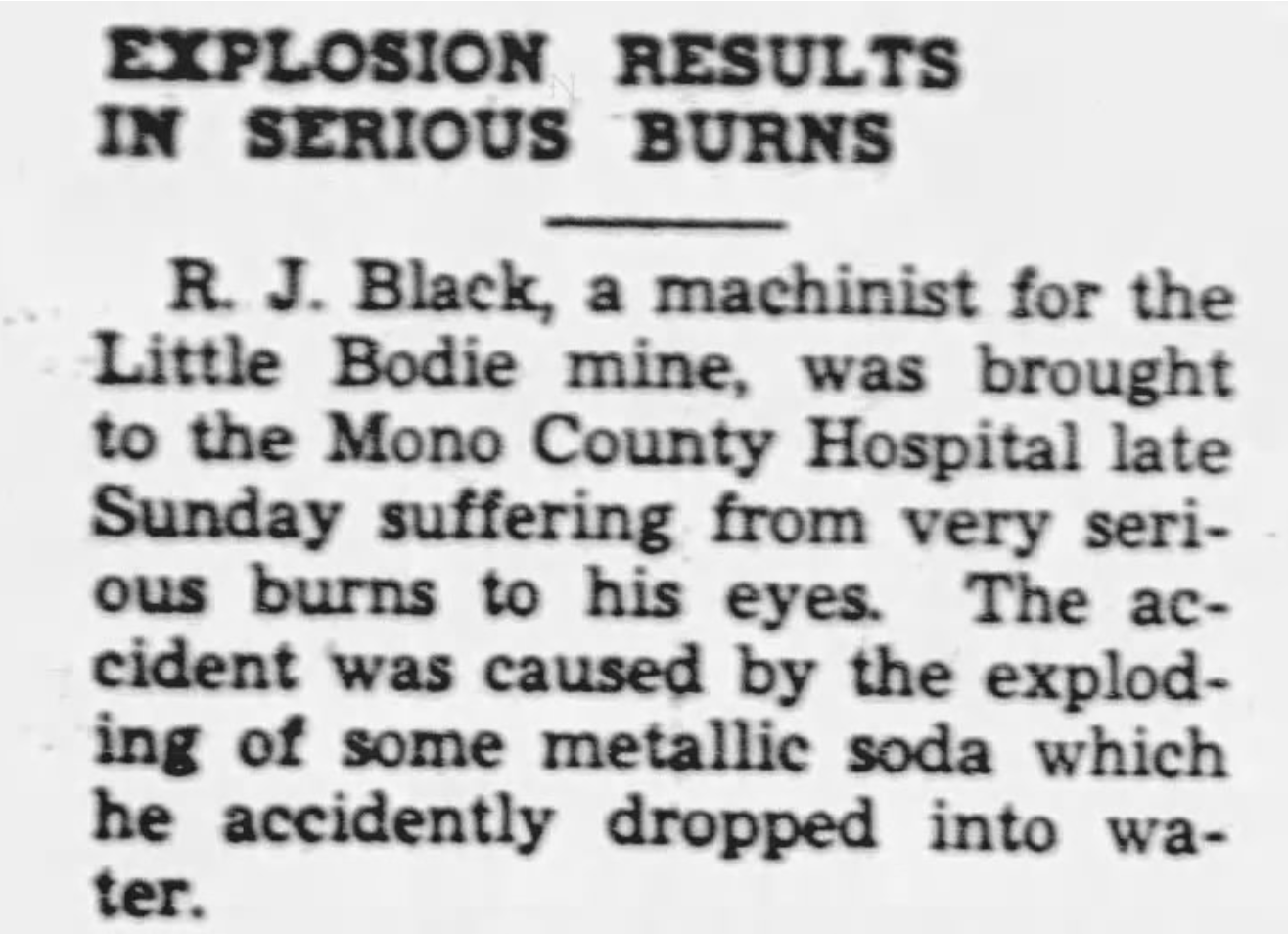
Mammoth Lakes, California • Thu, Nov 10, 1938
In November 1938, Little Bodie machinist R.J. Black dropped metallic soda into water. The resulting explosion severely burned his eyes. Dr. William Russle treated Black at the Mono County Hospital. His injuries exceeded the care available locally, and Black was sent to Los Angeles for treatment. While the burns were deep, Dr. Russle believed Black would regain his vision.
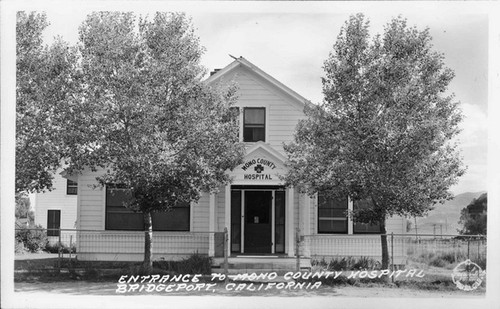
(Photo credit: Frasher Postcard Collection)
Little Bodie Today
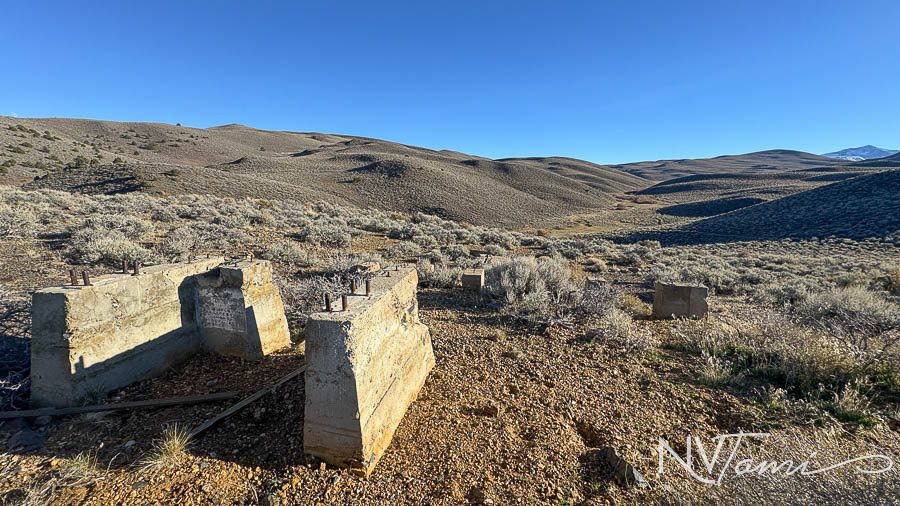
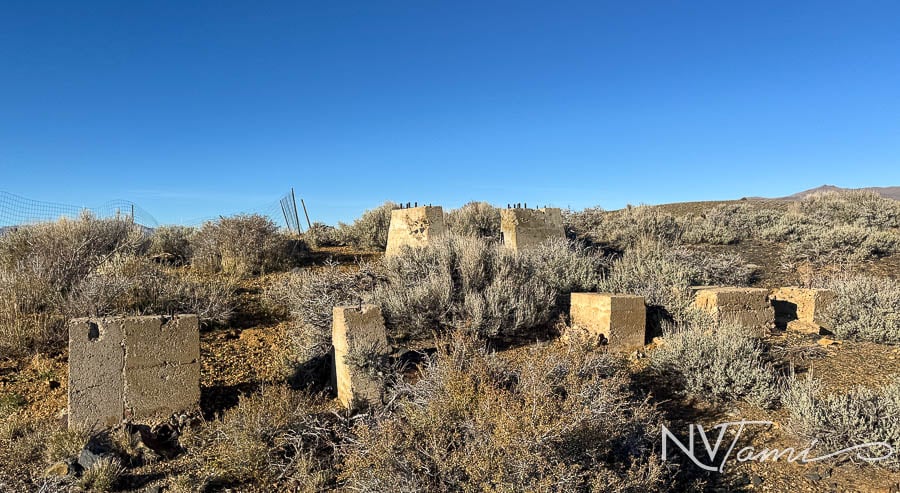
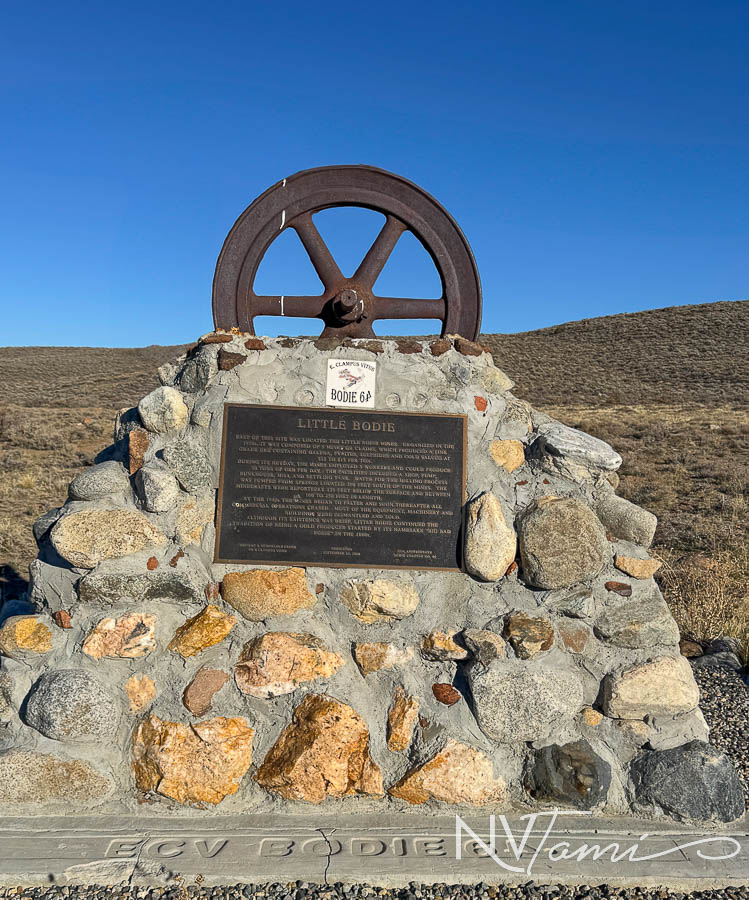
Little Bodie was never a great producer like its namesake. Mill foundations cover the top of the hill alongside a mine shaft. ECV erected a monument on the highway, two miles south of the Bodie turnoff.
WANT MORE GHOST TOWNS?
For information on more than five hundred ghost towns in Nevada & California, visit the Nevada Ghost Towns Map or a list of Nevada ghost towns.
Learn about how to visit ghost towns safely.

References
- Inyo Independent and Owens Valley Progress Citizen Fri, Nov 25, 1938
- Mindat: Little Bodie
- Mono Herald and Bridgeport Chronicle-Union Thu, Nov 10, 1938
- Mono Herald and Bridgeport Chronicle-Union Thu, Nov 17, 1938
- Mono Herald and Bridgeport Chronicle-Union Thu, Dec 8, 1938
- Owens Valley Progress CitizenFri, Jun 21, 1940
- The Sacramento Bee Tue, Sep 20, 1938
- Western Mining History: Little Bodie Mining Company


Elinor Lindberg says
Not much left of Little Bodie. Interesting, I never have heard fit. Might still have some gold?
Hope you are doing well.. Prayers are with your recovery.
Tami says
Not a lot, but interesting history. I’m sure there is still some gold, but how much is the question.
Thank you for all the prayers.
Chuck says
I guess I haven’t been paying attention, you mentioned the “healing was taking longer than anticipated “ … hope what ever happened, you are much better now!
Tami says
Thank you. I’m doing better now, just trying to regain my strength and energy.
I didn’t say a lot, but I was diagnosed with breast cancer early last fall. Surgery, then 7 weeks of radiation 5 times a week, now hormonal treatment. Thankfully, it was the best of a bad situation.
terry says
just got done watching a youtube video, “the dark story of america’s most eerie ghost town: bodie documentar”, you might want to watch it.
Tami says
Thanks, I’ll try to look for it.